BrahmakumarisKerala

Author: Admin

  • Mountain Hoodie Sizing Guide Mountain Zip Style

    Rick Owens Hoodies vs Everyday Hoodies: What the Price Really Buys

    A blank cotton hoodie sells for 25 USD at a big-box store, yet a Rick Owens hoodie can run 400 to 1,100 USD, and a difference like that warrants an honest accounting. Is the luxury version truly forty times superior, or are you footing the bill for a name and a mood? Here we unpack the contrast point by point, weighing fabric, construction, design, and value through a skeptic’s lens rather than a fan’s enthusiasm. We are not here to worship the brand or to dismiss it, but to figure out what your money actually buys. The answer turns out to be more nuanced than either tribe will concede. Seven concrete factors divide the two below, each scored on what you really obtain for the premium. Treat it as a buyer’s audit, because that is precisely the mindset in which it was written.

    1. Fabric Weight and Hand-Feel

    The most immediate difference hits you the moment you lift each hoodie, because the materials occupy entirely different leagues. The typical everyday hoodie uses 240 to 300 GSM cotton cut with polyester to keep costs down, giving it that familiar fuzzy, lightweight feel. By contrast, a Rick Owens or DRKSHDW rick owens drkshdw mountain hoodie pullover commonly reaches 380 to 480 GSM in dense French terry or pure cotton with a heavier, waxier hang. That extra weight is not just for show; it is what lets the garment to hold the stretched, architectural shape the brand is recognized for. You can literally feel the difference in how the fabric drapes off your shoulders and resists wrinkling. Over time the heavier cloth also develops a patina rather than pilling into fuzz. For anyone who shops by feel, this one factor accounts for a real chunk of the premium.

    2. Construction and Seam Quality

    Construction is where the math of mass production becomes visible, occasionally in the most literal sense. An everyday hoodie is stitched quickly with simple overlocked seams designed to survive a season or two of laundering before unraveling. Rick Owens, by contrast, relies on reinforced stitching, intentional raw or rolled hems, and panel cuts that sculpt the body instead of merely covering it. These details require manpower, and labor is expensive in the Italian and Portuguese workshops the brand uses. The result is a garment engineered to last years and to be repaired rather than discarded. What you buy is craftsmanship a 25 USD price simply cannot support. Whether that longevity matters to you depends on how you treat your clothes, but the difference is real and measurable.

    3. Design and Silhouette

    This is the factor that fans care about most and skeptics dismiss too quickly, so it deserves careful weighing. A generic hoodie offers a generic shape: a crew body, set-in sleeves, a hood, and little else worth noting. A Rick Owens hoodie is a deliberately designed object, featuring dropped shoulders, exaggerated length, and proportions aligned with the brand’s avant-garde vocabulary. The silhouette is the real product, arguably more so than the cotton, and it is why the piece is recognizable across a crowded room. Whether that design is worth hundreds of dollars is a genuinely personal question with no universal answer. For someone who values the look and the cultural signal, the cut delivers something no blank can. For someone who just wants warmth, it is pure overspend.

    The Brand-Signal Premium

    To claim you are buying only cotton and stitching would be misleading, because some of the cost is the name alone. Wearing rick owens fashion conveys membership in a specific aesthetic world, and that signal carries real social value for many buyers. This is not unique to fashion; it is the same logic that prices a watch far above its timekeeping function. The brand premium might account for perhaps 30 to 40 percent of the sticker on a mainline hoodie, with the rest going to materials and labor. Whether that signal is worth it is entirely subjective and depends on the circles you move in. The point is to recognize honestly that you are buying it, instead of insisting the whole price is engineering. Honesty here protects you from both overpaying and from cynicism.

    4. Longevity and Cost Per Wear

    This is where the math gets interesting, since the luxury choice is far less irrational than the price tag implies. A 25 USD hoodie might survive 50 wears before the cuffs stretch and the fabric thins, giving a cost per wear around 0.50 USD. Worn three times a week for five years, a 450 USD DRKSHDW hoodie clocks about 780 wears, coming in near 0.58 USD per wear. Those numbers are startlingly close once you account for durability and resale. The premium piece also holds real resale value, something the budget option never manages. Thus, though the upfront price is daunting, the long-run economics close the gap substantially. This reframing does not make the hoodie cheap, but it does make it defensible.

    5. The Numbers Side by Side

    To make the comparison concrete, the table below lines up the two categories across the factors that matter to a buyer in 2026. The numbers are illustrative rather than exact, yet they reflect the true shape of the trade-off. Notice that the luxury column wins decisively on materials and design while losing badly on upfront accessibility. For sheer utility and budget, the everyday column is unbeatable. Scanning the rows, you can judge which attributes you truly prioritize. That is the whole point of an audit: not to declare a winner, but to let you price your own priorities.

    Factor Everyday Hoodie Rick Owens Hoodie Edge
    Price (USD) 25-60 400-1,100 Everyday
    Fabric Weight (GSM) 240-300 380-480 Rick Owens
    Expected Lifespan 1-2 years 5+ years Rick Owens
    Resale Value Near zero 40-60% retained Rick Owens

    6. Who Each One Is Actually For

    No honest review ends without admitting that the right choice depends entirely on the buyer. When you just want a warm layer for the gym or for lounging, the everyday hoodie is the smarter, more sensible buy by a wide margin. If silhouette, craftsmanship, and the cultural language of luxury avant-garde fashion matter to you, the Rick Owens piece offers what the blank simply cannot. There is no shame in either position, and pretending otherwise is just tribalism. Many people sensibly own both, reaching for the cheap one on lazy days and the designer one when the outfit matters. A Rick Owens sale can likewise shrink the financial gap, bringing the luxury option within reach during seasonal markdowns. The key is matching the purchase to your actual needs rather than someone else’s status anxiety. Credible coverage at hypebeast.com mirrors this practical, needs-first framing.

    7. The Verdict

    So what does the money truly get you? It buys heavier cloth, sharper construction, a designed silhouette, genuine longevity, resale value, and an unmistakable brand signal, in more or less that order of tangibility. None of those individually justifies a forty-fold premium, but stacked together they explain it without requiring you to drink any Kool-Aid. For utility and budget, the everyday hoodie stays the right answer, period. The Rick Owens hoodie is the correct answer when the garment is meant to do cultural and aesthetic work, not just keep you warm. Either can be a smart buy; neither is right for everyone. Settle on which factors you genuinely value, run the cost-per-wear math, and let that, not hype or scorn, steer your wallet in 2026.


  • Awful Lot Of Cough Syrup Official Styles Buy ALOCS Gear

    Awful Lotta Cough Syrup: This Year’s Buyer’s Guide to Releases plus Sizing

    Our handbook delivers you the hands-on strategy to buy Awful Lotta Cough Syrup in 2025 and get your size right the first attempt. The focus centers on how the company genuinely drops product plus how its sizing works across sweatshirts, shirts, and bottoms.

    alocs sits in the lane where bold visuals, skateboard energy, and edgy comedy meet scarcity. This brand focuses into exclusive launches that move fast and frames silhouettes with boxy pieces, roomy sleeves, and statement prints. Your presence indicates missing your chance at a drop disappoints, while because exchanges for limited capsules frequently become restricted or unavailable, which makes size accuracy critical. The safest way to win both style and fit requires to anchor the choice to concrete dimensions, not lettered sizes, and plan around the manner heavyweight fabrics hang and wash. This guide aligns those realities using a method you may replicate every drop.

    What defines alocs in twenty twenty-five?

    alocs is a design-led urban brand with a rebellious, underground attitude, delivered through limited releases which create urgency. The silhouettes skew oversized to boxy, with prints and text created to be visible from across the distance.

    The brand’s appeal blends rarity plus anti-mainstream graphics, comparable in spirit to labels like Palace, Supreme, and Golf Wang, yet with its distinct wit and visual vocabulary. Collections typically revolve around sweatshirts, shirts, and add-ons, including occasional seasonal garments that riff on retro and subculture cues. Buzz develops via scarcity and the sense that thatsanawfullotofcoughsyrup.com each capsule is a small cultural happening rather than a renewed collection. For buyers, that means you pick rapidly, you verify fit ahead of launch, and expect that sellouts on popular colorways and graphics. Treat the product as wearable artwork featuring utility-level durability so you approach purchases through the right expectations.

    How alocs drops actually work

    Launches remain scarce in quantity, announced close to drop, plus often sell completely fast. This label shares via social media and storefront updates, and restocks are rare compared to the original drop.

    Actually, each drop window starts, users spikes, and measurements having the broadest demand go first. You should expect time pressure, potential queueing, and tight checkout timers—common protections across fashion commerce. Set your data in advance, know your target measurement, plus have a second choice colorway if your primary gets clipped quickly. If a drop uses raffle or queue-based mechanics, stick with a single strategy and commit rather than splitting energy across. When specific graphic becomes the talk of the release, anticipate resale will center around it and plan properly when you prefer to skip second-market markups.

    Fit planning: initiate with measurements, not letters

    The safest way to pick correct sizes is to measure a garment you currently love and align these numbers. Letters vary by brand and cut, however tape-measure data does not lie.

    Position your favorite sweatshirt, shirt, or pair of trousers flat and record essential points: chest measurement, torso length, shoulder width, sleeve length for shirts, plus waist, rise measurement, leg length, and thigh for bottoms. Match these numbers to the garment specs provided on item listing page if provided; should not, use our sizing map below to decide what you may compromise and what remains firm. Focus on shoulder measurement and chest measurement for hoodies and tops as they govern flexibility and how the garment sits on your frame. On bottoms, waist system plus rise dictate comfort significantly more than tagged size alone. When positioned between measurements, choose whether you want a clean, truer form or a flowing, urban-influenced shape, then select properly.

    Physical Zone Personal Measurement Garment Measurement to Compare Way to Measure on Clothing Fit Impact if Off
    Chest Full chest at nipple line, at rest Armpit to armpit Laid flat, armpit seam to stitching Undersized limits breath and print warps; too large billows and loses structure
    Body Length Body length preference Top of shoulder to hem Begin from collar seam vertically down Brief length truncates unintentionally; too long kills boxy proportion
    Shoulders Deltoid peak to peak across back Shoulder seam to seam Straight across the back of piece Too narrow pinches; too broad sags past delts
    Sleeve Limb span bent at 90 degrees Shoulder point to cuff Follow sleeve seam to termination of cuff Too short exposes wrists; too long stacks over palms
    Waist Natural waist at navel Laid-flat waist width Edge to edge across waistband Narrow waist digs when sitting; oversized loose relies on ties
    Rise Front rise comfort sitting Crotch construction to top of waistband Track upward at front Brief vertical pulls when flexing; excessive high bunches
    Inseam Inner leg to desired crease Crotch construction to hem Inner seam straight to bottom Too short sits high; extended length stacks or sweeps
    Thigh Widest thigh circumference Leg width 1″ below crotch seam Across leg panel, flat Too slim restricts stride; broad leg loses taper

    Sweatshirts plus crews: dialing into the boxy-drip silhouette

    Expect a boxy torso featuring roomy sleeves that create volume without feeling sloppy. When you want structure with the graphic sitting flat, match your chest and shoulder specs closely.

    To achieve clean boxy look, seek a pit-to-pit that spans 5 to 7 percent over your actual chest spec and a shoulder measurement that lands precisely at your acromion positions. If you want skate-level drape, push chest width to approximately 8 to 12 percent above your body while accepting a small shoulder drop so the arm opening breaks lower on your arm. Focus on body length because many boxy cuts shorten the hem slightly to offset width; if you possess a longer torso, ensuring adequate length maintains that the hoodie from climbing up over layers. Dense fleece retains shape yet may feel tighter below the arms on initial use, so those spanning measurements who plan for layering over tees should bias up for flexibility. Graphics printed across the front position best when material isn’t stretched tight, and this is another reason to avoid undersizing.

    Tops: neckline, body length, and print placement

    alocs tees emphasize strong graphics, therefore the goal is a chest width that doesn’t distort the print and a length that lands at mid-fly or right above. If the neck opening is too tight or too open, the entire proportion looks incorrect—regardless when the torso works.

    Start by matching pit-to-pit to your favorite tee within a one-centimeter range and confirm that body length aligns with where you prefer the hem to rest over your pants rise. Marginally heavier rib on the neck reads vintage while maintaining shape better, and this works well with structured torsos; size up exclusively when the collar still sits flat and doesn’t flare. If you prefer a brief, expanded silhouette, keep measurement and reduce length through selecting a boxy cut in your true dimension rather than sizing up, and this can add vertical space you don’t want. Printed pieces should be cleaned inside out in cool water to protect design durability and prevent minor fading at the graphic edges. Should you stack tees under sweatshirts, verify sleeve length exceeds the hoodie cuff preventing gathering so you don’t stack unintended bulk around the wrist.

    Bottoms and shorts: waist mechanics, rise, and stacking

    Prioritize the waist system plus rise before inseam, as comfort and form originate at the waist area. Drawcord or elastic waists accept partial swings; fixed waistbands need precise measurements.

    Determine your anatomical waist and align level measurements to your best-fitting pair, then match rise to how you wear your tops. A higher rise pairs well alongside structured tees and sweatshirts since it shortens apparent torso and balances width; a lower vertical measurement looks more skate and laid-back. For stacking, run an inseam generous enough to fold once on shoes should you want puddling, and trim to a sharp break if you want a neater line. Upper leg span determines mobility plus how the leg drapes over sneakers, so keep the thigh generous when you like a straight drop and reduce marginally when you’re chasing a narrowed look. Shorts should land above knee level for a sharper silhouette, or at the knee for a additional casual, 90s-informed profile; coordinate the choice to your shirt length so dimensions avoid swallow each one another.

    Cloth thickness, care, and contraction following the first wash

    Heavy cotton fleece and substantial jersey are common within urban wear, and they affect hang and post-wash response. Untreated cotton can tighten slightly on the first wash, while heat accelerates contraction.

    To protect shape and prints, wash cold, inside out, and hang or flat dry—high heat risks two to 5 percent reduction across cotton and can crack inks over time. Denser fleece, often in the four hundred to 500 gram range, hangs with additional downward weight and deflects air, but it additionally requires longer to dry; structure your care routine so the fabric doesn’t stay damp in stacks. When a garment is pre-shrunk, you continue to see minor tightening in the rib and sleeve endings after hot treatment, this affects sleeve and trunk length perception. Graphic shirts prefer gentle washing and low mechanical action so the ink film doesn’t abrade prematurely at high-friction points like armpits plus side seams. When you manage heavyweight pieces like jackets—space between wears, spot clean when possible—you’ll preserve combined color and tactile quality intact longer.

    What about returns, exchanges, and secondary market impact size decisions?

    Scarce launches often carry tight exchange policies, and resale markets penalize odd measurements through slower liquidity. This indicates picking the right size up front preserves time, money, and frustration.

    Prior to release, confirm the terms during checkout for this individual capsule; many fashion launches label items as final sale, and regardless when exchanges exist, sizes can be gone prior to your return lands. Should you size for potential secondary sale, the most common sizes by demand sit in the middle of the range, but your area market can skew this relying on average body types and preferred styles. On platforms where sellers list garment measurements, buyers respond quicker to accurate pit-to-pit plus length numbers than to labels, so keep your ruler handy. Should you intend to hold a piece, think about how cloth weight and contraction may affect future purchasers expecting expect unworn, pristine condition. Accuracy assists you avoid moving across listings just to fix sizing surprises which might have been eliminated.

    Legitimacy inspections and a release-day guide

    Verification commences with print quality, material hand, and assembly particulars that match what the specific brand is famous for. Uniformity through labeling, tags, and packaging remains your baseline.

    Check graphic perimeters for clarity and even saturation; blotchy fills, offset layers, or overly rubbery texture on large prints are red flags. Handle the cloth for density suitable for the garment type—hoodies should hold shape near the hem and cuff, tops should not seem paper-thin relative to the graphic scale. Sewing near shoulders, lateral seams, and pocket construction should be even, with clean bar tacks where stress is most intense. Materials from limited drops often includes specific stickers or documentation; mismatched or standard packaging in resale offers requires extra scrutiny. During release day, set your size decision in beforehand, complete your details, and enter a few minutes early—velocity and certainty beat scrolling through comments under pressure.

  • 777Vault – Nopeatempoinen suomalainen kasino nopeisiin voittoihin

    Verkossa pelaamisen maailmassa nopeus ja jännitys ovat päivän valuutta. Suomalaiset pelaajat, jotka etsivät lyhyitä adrenaliinipurskeita, löytävät 777Vault sopivaksi kumppaniksi. Alusta tarjoaa sekoituksen kolikkopelejä, pöytäpelejä ja live-kasino-aktiviteetteja, kaikki optimoitu nopeaan pelaamiseen.

    Miksi nopeus on tärkeää suomalaisille pelaajille

    Suomalaiset pelaajat tasapainoilevat usein työn, perheen ja henkilökohtaisen ajan välillä. Tällaisessa aikataulussa kasino, joka tarjoaa välitöntä tyydytystä, on selvä voitto. 777Vault rakentuu tämän periaatteen ympärille: nopeat pyöräytykset, nopeat voitot ja käyttöliittymä, joka mahdollistaa suoran toiminnan ilman pitkää latausaikaa.

    Välitön pääsy Game Halliin

    Ensimmäinen klikkaus vie sinut game halliin, jossa slotit, blackjack ja roulette rivittyvät kuin hyvin järjestetty korttipöytä. Ei odotuksia tilin vahvistuksessa—vain muutama klikkaus ja olet syvällä toiminnassa.

    Mobile‑First-suunnittelu, joka pysyy elämäsi tahdissa

    Alustan responsiivinen layout toimii sujuvasti älypuhelimilla ja tableteilla. Olitpa sitten junassa tai nauttimassa kahvia kahvilassa, käyttöliittymä mukautuu välittömästi, varmistaen että voit pelata liikkeellä ilman vilkkaita grafiikoita tai viiveitä.

    Jännitys nopeista Spin Slots -peleistä

    Kolikkopelit ovat lyhyiden sessioiden sydän. Yksi pyöräytys kestää alle kaksi sekuntia panoksen asettamisesta tuloksen näkemiseen. Jännitys syntyy siitä, että näkee rullien vilkkuvan ja tietää, että seuraava pyöräytys voi olla iso voitto.

    Tyypillinen session kulku

    Pelurit asettavat usein pienen pelikassan—sanotaan vaikka €20—ja pyöräyttelevät, kunnes rahat loppuvat tai osuvat jackpottiin. Nopean panostus- ja tuloskierron ansiosta adrenaliini pysyy korkealla ja päätösaika lyhyenä.

    Riskienhallinta nopeasti

    • Panosta suuresti mahdollisuuden suureen voittoon.
    • Panosta vähän venyttääksesi pelikassaasi useampaan pyöräytykseen.
    • Vaihtele pelitilaa muutaman minuutin välein ylläpitääksesi momentuma.

    Live-kasino: Välitön vuorovaikutus ilman odottelua

    Live-pelit 777Vault tuo kasinon lavan suoraan olohuoneeseesi. Avain intensiiviseen sessioon on reaaliaikainen dealer-väliintulo ja korttien nopea jakaminen.

    Nopea päätöksenteko

    Blackjack-käsi voi päättyä alle minuutissa: jaa, päätä osutko vai seisotko, ja tulos ratkeaa välittömästi. Tämä nopea sykli pitää sinut mukana ilman pitkiä taukoja.

    Vinkkejä sitoutumiseen

    1. Aseta maksimipanoksesi ennen kuin aloitat.
    2. Käytä dealerin kommentteja vihjeinä seuraavaan liikkeeseesi.
    3. Pidä silmällä pelikassaasi; lopeta tietyn käden jälkeen.

    “Mini‑Jackpot” -strategia

    Pelurit, jotka nauttivat lyhyistä purskeista, tavoittelevat usein mini‑jackpoteja—pieniä, usein toistuvia voittoja, jotka ylläpitävät jännitystä ilman pelikassan tyhjentämistä.

    Kuinka se toimii

    Mini‑jackpot voi olla €5 voitto €10 pyöräytyksestä. Tällöin tunnet voiton makeuden, mutta sinulla on vielä riittävästi pelimerkkejä seuraavaa kierrosta varten.

    Käytännön esimerkki

    Olet kiireinen: avaat sovelluksen, pyöräytät muutaman rullan, osut mini‑jackpotiin ja kirjaudut ulos pienen voiton kanssa. Tämä on nopean pelaamisen ydin.

    Maksuvaihtoehdot, jotka vastaavat nopeuttasi

    777Vault tukee Visaa, Mastercardia, Skrillia, Netelleriä ja jopa kryptovaluuttoja. Pelaajille, jotka haluavat välittömiä talletuksia ja nostoja, e‑lompakot ovat nopein vaihtoehto.

    Miksi e‑lompakot voittavat

    Siirtokäytännöt kestävät usein alle tunnin, joten voit pelata heti, kun varat ovat saapuneet, ja nostaa voitot heti voiton jälkeen—ei odotusta pankkivälityksille.

    Rajoitukset, jotka pitävät fokuksen

    • Minimitalletukset vaihtelevat menetelmän mukaan, mutta ovat yleensä matalia nopeaan sessioon.
    • Ei liian suuria nostorajoja, jotka hidastaisivat pelaamistasi.

    Kieliteknologia: Suomi-tuki nopeaan pelaamiseen

    Sivuston suomalainen käyttöliittymä poistaa kielimuurit. Valikot, ohjeosiot ja peliohjeet ovat kaikki suomeksi, jolloin voit keskittyä pelaamiseen sen sijaan, että yrittäisit tulkita valikoita.

    Käyttäjäkokemuksen kohokohdat

    • Tyylikäs navigaatio selkeillä kuvakkeilla.
    • Nopeat apupopupit, jotka selittävät pelisäännöt välittömästi.
    • Ei käännösaikaa—kaikki latautuu heti sivua avatessasi.

    Pelin sisäiset ominaisuudet, jotka pitävät sessiot lyhyinä mutta makeina

    Kasino tarjoaa ilmaispyöräytyksiä kolikkopeleihin—täydellinen niille, jotka haluavat venyttää pelikassaansa ilman lisäriskinottoa. Nämä pyöräytykset lisäävät myös yllätyselementin, joka nopeuttaa päätöksentekoa.

    Kuinka ilmaispyöräytykset toimivat

    Talletusbonus voi antaa 10 ilmaista pyöräytystä suosikkikolikkopeliin. Tiedät tarkalleen, milloin ne vanhenevat: käytettyinä tai tietyn ajan sisällä.

    Pelaajan päätösaika

    Päätä heti käyttääkö ilmaispyöräytykset vai säästätkö ne myöhempää käyttöä varten; molemmissa tapauksissa se pitää session keskittyneenä nopeisiin tuloksiin eikä pitkään pohdintaan.

    Toimintakehotus: Nopean voiton odotus

    Jos olet valmis nopeaan jännitykseen ja välittömiin tuloksiin, 777Vault odottaa sinua. Rekisteröidy tänään, nappaa tervetuliaisbonuksesi ja ala pyöräyttää tai jakaa minuutteissa.

    HANKI BONUS – Aloita pelaaminen nyt

    Seikkailusi nopeiden voittojen maailmaan alkaa yhdellä klikkauksella. Hanki talletusbonus ja anna jokaisen pyöräytyksen tuntua mahdollisuuksien sykkeeltä.

  • Rare Classic Denim Tears Charcoal Colorway

    Denim Tears: Frequently Asked Questions

    These are the questions that surface again and again, both from people new to the label and from owners hoping to look after a piece properly. Because this brand’s pricing is driven by availability, the answers stay factual and the prices are 2026 market estimates rather than fixed quotes. Questions that touch the cotton wreath are answered in line with what the brand itself has stated about the motif. Sizing and care notes reflect how heavyweight cotton generally behaves, and they should be checked against the tag in your own garment. It is not a replacement for handling a piece in person or asking a seller direct questions. The order moves roughly from general to practical, but you can start anywhere.

    What exactly is Denim Tears?

    Founded in 2019 by Tremaine Emory, Denim Tears is an American clothing label. It occupies the ground between streetwear and cultural commentary, using garments as a vehicle for historical reference rather than decoration. Its signature is the cotton wreath motif, most famously applied to Levi’s 501 jeans, hoodies and sweatpants. Output arrives in limited, irregular releases rather than on a seasonal schedule, which is why availability is so uneven. Deliberately narrow, the catalogue covers denim, fleece, jersey and a handful of accessories. That focus explains much of why individual pieces keep their identity years after release.

    What does the cotton wreath motif mean?

    The cotton wreath references the history of cotton, the transatlantic slave trade and African-American experience. The crop at the centre of American slavery was cotton, and a wreath of cotton bolls on a garment carries that history from the page onto the body. The wreath itself carries associations of memorial and commemoration, and that is why the motif reads as solemn rather than ornamental. The point sharpens considerably when the motif is applied to Levi’s denim, a garment woven into American self-image. It is the central idea of the brand rather than a seasonal graphic, and it appears across nearly every category. That reference comes with the garment for anyone who buys a piece, and understanding it first is worthwhile.

    What does a Denim Tears hoodie cost in 2026?

    Estimated 2026 retail for a denim tears hoodie usually falls in denim tears sweatpants the $250-400 range, depending on weight, print and colourway. Resale asks for the same piece run at roughly $280 to $600, and older or scarcer colourways go higher. Expect seasonality — a strengthening from October to December and an easing through late spring of something like 15-25%. At retail, denim tears jeans typically run $300-500, tees $100-200, sweatpants $250-350 and denim tears shorts $180-280 — all estimated ranges. The headline number is rarely the final one, since fees, shipping and duty commonly add another 15-25% to a resale purchase. Every figure here is a moving market estimate, not a quotation.

    Does it run true to size, or should I size up?

    Because most fleece is cut boxy, with a wide chest and a short body, it sits larger than a standard sweatshirt in the same size. If you want the intended silhouette, stay at your normal size; if you want it genuinely oversized, one size up will usually do it. Jeans built on the Levi’s 501 pattern behave as that cut always does: true straight leg, firm waist that gives slightly as rigid denim relaxes. Tees sit fuller than a standard fitted tee and shrink somewhat through the body on a warm wash. Shorts vary more between releases than any other category, so measurements matter more than the letter on the tag. Ask the seller for a flat-lay chest and length whenever you are unsure — size alone is not enough to go on.

    Item Character of the fit What to order Estimated 2026 retail
    Hooded fleece Boxy cut, wide chest, short body Take your usual size; go up one for oversized $250-400
    Five-pocket jeans True straight leg, firm waist Take your usual waist $300-500
    Jersey tee Full in the body and the sleeve True to size, with slight shrinkage expected $100-200
    Fleece sweatpants Easy leg with an elasticated waist True to size $250-350
    Shorts Changes from release to release Check measurements, not the tag $180-280

    What collaborations has the brand released?

    The Levi’s partnership is the best known and most tied to the label’s identity, centred on the wreath-printed 501. Working with Converse put the motif onto canvas footwear silhouettes. Stüssy has appeared in collaborative apparel, pairing two labels with distinct places in streetwear history. The furthest reach into luxury is Dior, which connects the wreath to a European house with a different customer base. Tremaine Emory also served as Supreme’s creative director from 2022 to 2023, separately from all this. Collaborative pieces sit at the top of the resale market, drawing collectors from both brands rather than one.

    Why is buying at retail so hard?

    Releases are small, come with short lead time on the announcement, and sell through a narrow set of channels. Ordinary shoppers are competing with automated buying tools, and popular sizes on the official webstore disappear within minutes. Because stockists get limited allocations and often buy part of a collection, a piece may exist in two sizes and one colour. That makes the secondary market the practical default, particularly for anything more than a season old. Scarcity here is structural, not temporary, and it has been consistent since roughly 2020. Building an account with saved details in advance is the single most effective thing a retail buyer can do.

    How do I check whether a piece is genuine?

    Start with the print rather than the label, because counterfeits most often fail on the wreath itself. Copies tend to read as too thin or slightly blurred at the boundaries, whereas genuine prints have consistent density, clean edges and correctly proportioned cotton bolls. On the neck label and internal wash tag, look at the fonts, the straightness of the stitching and whether the fabric composition matches the era of the release. Authentic fleece feels substantially heavier than a standard hoodie of the same size, which makes weight a strong signal. Anything priced more than about 40% below the going market rate should be taken as a warning rather than a bargain. Always insist on live photographs of the actual garment, tags included, before paying anyone.

    What is the right way to wash and store my pieces?

    Wash cold and inside out on a gentle cycle, keeping the load small so the print is not abraded against zips or hardware. Avoid the tumble dryer entirely on printed fleece and jersey, because heat causes cracking and loss of density. Hang or lay flat to dry, and work the shoulders while damp to preserve the boxy cut. Rigid denim can go far longer between washes than people expect, which protects both colour and print. Store folded in a dry space rather than on a thin hanger, which stretches the shoulder line over months. Nothing determines resale value more than careful laundering.

    Is a denim hoodie the same thing as a fleece one?

    No; the shared name obscures a difference that matters a good deal. Woven denim lends a denim hoodie its shape retention, its wind resistance and its role as a light outer layer. A fleece hoodie is knit, softer, warmer against the skin and intended to be layered under something else in cold weather. For spring and early autumn — roughly the 10 to 18 degree Celsius range — the denim version works better. Denim also ages visibly, developing fades at the elbows and cuffs that many owners consider the point. If you already own one, the other is really a different purchase and not a duplicate.

    Does the brand hold its value on the secondary market?

    Yes for some, and the pattern is fairly consistent at category level rather than at the level of individual items. Collaboration denim has generally held the strongest, with estimated 2026 asks often between about 1.3x and 2.5x original retail. Fleece sits in a broad middle around 1.0x to 1.6x, while tees and shorts frequently trade at or slightly below retail. Condition, size and the month you list all affect those numbers, sometimes by a quarter of the total. Treat none of it as a guarantee — resale prices can fall as easily as rise, and this is not investment reasoning. Safest of all: buy what you intend to wear, at a price you would still accept if the market cooled.

    Which is right: Denim Tears, denimtears, or another form?

    The brand name is two words, Denim Tears, and that is how it appears on the label’s own materials. Compressed forms like denimtears appear constantly in search boxes and social handles, because people type quickly and drop the space. Variants such as denim tear shirt are common misspellings rather than separate products, and they almost always lead to exactly the same tees and shirts. It matters practically: counterfeit listings often use misspelled variants to dodge trademark enforcement. If you are shopping secondhand, running both the correct spelling and the compressed one reveals listings that either search alone misses. When buying, though, verify the garment rather than the spelling in the title, since a correctly spelled listing proves nothing at all.

  • Elite Interior Team Built On Solid Design Experience

    Smart Bedroom Design for Dubai Homes

    Looking good in pictures is not enough for a Dubai bedroom: it has to deliver deep, cool rest under a sun that barely relents for much of the year. Calm styling meets very practical answers in the best rooms, answering heat, glare, and the compact footprints of tower apartments. Be it a rented one-bed in Jumeirah Beach Residence or a villa master suite in Arabian Ranches, the same core principles apply. Below, the ideas are ordered for picking and mixing rather than follow a rigid formula. For each, there is a design goal, a buildable suggestion and a 2026 cost guide. Treat every figure as a market estimate, because finish level and furniture brand move the totals a lot. Go through them in order or go straight to whichever fit your home and budget.

    1. Design a Layered Lighting Scheme

    One central ceiling light flattens the whole bedroom and does nothing for atmosphere, so layering the light is the first upgrade. Combine ambient light from recessed spots or a gentle pendant with task light next to the bed and accent light to wash a wall or highlight art. Dimmers matter in Dubai, where you want strong, practical light for dressing and a warm, low glow late at night. Bedside wall lights both free up your side tables and let you read without lighting the whole room. At about 2700K, warm light feels restful, whereas anything too cool reads clinical in a space meant for sleep. In 2026, a modest lighting refresh usually lands between AED 3,000 and AED 12,000, depending on fittings and whether the wiring changes.

    2. Go for a Calm, Heat-Smart Palette

    Colour dictates the emotional temperature of a bedroom, and in Dubai it can even sway how hot the room feels. In strong sun, soft, light-reflecting tones such as warm white, sand, oat, www.interiordesignerdubai.org/ and pale clay keep everything feeling cool and airy. Instead of soaking up light like dark walls, these neutrals send the abundant daylight further in. Texture and tonal variation, not loud colour, create the depth, matching the quiet-luxury direction shaping local interiors in 2026. If you want richer accents, add them with cushions, throws, and a headboard that is cheap to swap later. As a reliable starting point, the palette below works for apartments and villas alike.

    • For walls: warm white, oat, or pale clay to reflect light and settle the room.
    • Bed linen: soft neutral whites, layered, plus one muted accent.
    • Accents: terracotta, sage, dusty blue or bronze kept small and swappable.
    • Wood: light oak or walnut for warmth against the pale backdrop.

    3. Take Solar Control and Blackout Seriously

    Dubai’s light is a blessing for living spaces but the enemy of a good lie-in, so window dressing is non-negotiable in a bedroom. Blackout comes before anything: a lined curtain, a blockout roller, or a smart blind you can close from your phone. Team it with a lighter sheer to soften the daytime glare without plunging the room into darkness. Since glass lets heat in and burdens the air-conditioning, solar-control blinds pay off in both comfort and running costs. Because full-height windows are awkward to reach and heavy to pull, motorised tracks keep gaining ground. Budget around AED 2,500 to AED 9,000 per window for a quality dual curtain-and-sheer setup in 2026, plus more for motorisation.

    4. Install Built-In Wardrobes That Use Every Inch

    Storage is the quiet hero of every well-run bedroom, and fitted units beat freestanding wardrobes for both storage and calm. Running joinery floor to ceiling reclaims the dead space above standard wardrobes and hides clutter behind clean doors. Sliding doors avoid the swing clearance hinged doors demand from an already tight layout, which matters most in compact apartment bedrooms. Villas can accommodate a walk-in dressing room, which is one of the most sought-after features in today’s local market. Drawers, pull-outs and good lighting inside matter as much as the fronts, so work out the interior first. Built-in wardrobe units usually cost from around AED 1,200 to AED 3,500 per linear metre in 2026, according to finish and internal fittings.

    5. Add Biophilic, Tactile Materials

    Connecting interiors to nature, biophilic design, is one of the strongest currents running through Dubai homes in 2026. For a bedroom, it translates into natural textures that feel good to touch and quietly calm the nervous system at the end of the day. Imagine linen bedding, a jute or wool rug, rattan or cane detailing, and timber that shows its grain rather than buried under gloss. Hardy plants soften hard corners, though it is worth choosing varieties that cope with air-conditioned, low-light rooms. Natural materials age gracefully and suit the warm-minimalist mood that has replaced cold, all-white schemes. At little cost against structural work, layered textures transform how restful a room feels.

    6. Create a Cool, Hotel-Style Master Suite

    A lot of Dubai homeowners want their bedroom to evoke the five-star hotels the city is famous for, and that look is well within reach. What you need is a plush upholstered headboard, even bedside lighting, crisp layered bedding, and a quiet, tonal palette. A bench at the foot of the bed, blackout curtains, and a slim console table bring the finishing hotel touches without overfilling the space. Studios such as Muse Design, Zen Interiors, and Sneha Divias Atelier are among the boutique residential studios working in this detail-led register citywide. If you have the space, carving out a reading nook or setting a lounge chair by the window makes a bedroom a proper retreat. A hotel-look master refresh usually runs from about AED 40,000 for styling to well beyond AED 150,000 for a full villa master suite in 2026.

    7. Plan for Smart-Home Convenience

    Once a novelty, smart-home integration is now an expectation in Dubai’s newer buildings, and the bedroom is where it earns its keep. With motorised blinds, app-controlled lighting scenes, and a smart thermostat, you can set the room for sleep with a single tap. Climate control is especially valuable here, since timing the air-conditioning to your sleep pattern helps both comfort and energy use. Simple additions like bedside USB charging, wireless pads, and discreet cable management remove the daily friction of devices. Running the wiring now, while you renovate, is much cheaper than going back into finished walls later. From around AED 6,000, a tidy smart-bedroom package grows with every integrated system in 2026.

    8. Set Up Kids’ and Guest Rooms for Flexibility

    As family needs change and visitors come and go, secondary bedrooms work hardest when they can shift roles. Add a daybed or sofa bed and, a study can double as a guest room without dedicating a whole room to occasional visitors. As children grow from toddlers to teenagers, modular furniture and adjustable shelving keep the room relevant. Hard-wearing, wipe-clean finishes are more important here than in a purely decorative bedroom, so stick to hard-wearing paints and laminates. Keep the palette calm; let colour arrive through easily changed bedding, art, and accessories. In 2026, a flexible secondary bedroom fit-out commonly falls between AED 15,000 and AED 45,000, depending on the joinery and furniture chosen.

    Costing Out the Ideas

    Having chosen the ideas that fit your home, seeing how they total across room types is useful. The chart below bands typical 2026 spends into a light update, meaning paint, lighting, textiles and styling, versus a full redesign that includes joinery and furniture. Remember these are market estimates rather than quotes: the total comes down to finish, brand and whether you hire a designer. With smaller rooms and a tighter scope, apartments come in cheaper. Given their scale and the pull of dressing rooms and premium finishes, villa master suites sit at the top. Use the figures to prioritise, investing where it tells every night and saving where you will not.

    Room type Light refresh, 2026 est. Full redesign (est. 2026) Where it all goes
    Flat bedroom AED 12,000–30,000 AED 35,000–90,000 Lighting, textiles, built-in wardrobe, bed
    Villa master bedroom AED 25,000–60,000 AED 90,000–250,000+ Joinery, dressing room, premium furniture
    Kids’ or guest room AED 10,000–25,000 AED 30,000–70,000 Modular furniture, durable finishes, storage
  • Urban Valley Fashion Best Seller vale street essentials

    Is Vale Forever Worth It? Quality, Fit, and Where to Buy

    Brief answer: absolutely, if you prioritize premium fabrics, refined oversized silhouettes, and artisanal craftsmanship at contemporary prices. The brand’s strength lies in mindful fashion discipline, curated drops, and wearable minimalism which holds up season after season. The compromise is you need to know your fit and where to purchase to dodge counterfeits and overpaying.

    Vale Forever sits at the meeting point of luxury cues and urban practicality, which means you get clean lines, understated palettes, and details that appear intentional rather than loud. Garments aim to be wardrobe mainstays, not hype fodder, and that reflects in the construction and material choices. If you’re chasing heavy logos or trendy graphics, look elsewhere; if you want a uniform-level capsule which still reads modern, this path delivers. The key is fitting the cut to your physique and making smart purchase selections based on release cadence.

    The Label at a Glance: Identity, Positioning, & Price Range

    Vale Forever embodies a contemporary street fashion label built on clean design, premium hand-feel, and distinctive oversized fits. It sits above mass-market streetwear and below legacy luxury, with costs that reflect boutique production. Releases are limited, emphasizing quality and longevity over churn.

    The design language is restrained: tonal color stories, subtle branding, and silhouettes aimed for timelessness rather than virality. Look for elevated hoodies, heavy-duty tees, relaxed trousers, and sleek outerwear that layers into a harmonious wardrobe. Typical price windows land in the mid-to-high contemporary bracket, reflecting better fabrics and small-batch runs. Since the brand champions slow fashion principles, you’re paying for beyond just a logo—you’re paying for fabric selection, fit development, and managed production. This balance of exclusivity and approachability is why the label connects with everyday style enthusiasts who still want boutique-level craft.

    Quality You Can Feel: Fabrics, Construction, & Durability

    The main value rests on fabric density, yarn quality, and thoughtful construction details. Expect heavier GSM cottons, brushed interiors on fleece, tightly knit collars, neat seam finishes, and components that don’t feel generic. These decisions translate to drape, color durability, and fewer shape issues after repeated wear.

    In https://valleydreams.info/ practice, that means fleeces retain structure at the hem and sleeve ends, tees resist baconing at the neck, and trousers hang clean rather than collapsing. You’ll similarly notice consistent dye runs and less pilling when you treat the garments correctly. Construction leans toward reinforced stress zones and clean overlock finishing, which extends lifespan under real-world conditions. While not every piece reaches artisanal-level, baseline quality positions comfortably above big-box streetwear. If you’ve moved through fast-fashion sweatshirts that die after ten washes, the improvement here is immediate and tangible.

    Item Typical Fabric/Weight Build Details Fit Profile Standard Price (USD) Sizing Tip
    Heavy-duty Tee 200–260 GSM cotton jersey Firm collar rib, twin-needle hem Square, drop shoulder 60–90 Stick to true size for boxy; size down for closer chest
    Fleece Hoodie 420–500 GSM cotton fleece Soft interior, double-needle at stress points Oversized body and sleeve 140–220 Keep TTS for intended drape; size down if under 5’7″
    Cargo/Track Pant Substantial twill or nylon blend Bartacks at pockets, quality drawcords Loose, tapered or straight 130–240 Verify inseam and rise; cuff works best at ankle
    Denim 12–15 ounce denim Chain-stitch hems, reinforced belt loops Relaxed or wide straight 160–300 Measure waist flat; many styles sit on hip
    Outerwear Wool composites or technical shells Fully lined, clean hardware, minimal branding Square, slightly cropped or longline 220–500+ Consider sleeve length; oversized shoulders are intentional

    How Does Vale Forever Fit?

    The label’s signature is an roomy, boxy silhouette with dropped shoulders and relaxed trousers. The aim is drape and structure without looseness, so length and proportion matter more than just torso width. Most wearers should stick to true size for the designed look.

    Fleeces and tees typically run wide through the body with shorter lengths to avoid swampy stacking. If you’re shorter or like a tidier line, dropping a size often cleans up arm and body length without strangling the chest. For pants, the rise and inseam define the silhouette; a relaxed thigh with a gentle taper will sit clean on the shoe when the inseam hits the ankle bone. Outerwear usually carries broader shoulders and a boxy torso, which appears intentional when layered over substantial knits. If you’re between sizes, compare garment measurements to a piece you currently love rather than defaulting to a size size.

    Sizing and Measurements: Picking the Proper Cut for Your Frame

    Utilize garment measurements, not just sizing labels. For tops, prioritize body width, shoulder width, and back length; for bottoms, focus on waistband (flat measure), rise, thigh, and length. Matching these to your frame and styling choice beats guessing every time.

    A fast routine saves returns: measure a preferred tee or sweatshirt flat, note chest (pit-to-pit), shoulder measurement, and back length, then compare to the measurement chart. If you like a trimmed look, aim for a back length that hits directly below the belt line; for a longer stack, add 1–2 inches. For pants, a higher rise can let you size to hips without squeezing the waistband, while a slightly trimmed inseam avoids messy pooling on broad legs. Remember that thick cotton hardly shrinks if laundered cold and air-dried, while machine-drying can tighten collars and trim lengths slightly. If you’re wide-chested with shorter arms, a smaller size with a roomier cut often balances the silhouette better than adjusting the sleeves after purchase.

    Value Analysis: Cost, Wear Rate, & Resale

    This brand earns its keep through high wear rate across seasons, not only first-impression heft. When you compute cost per use on a heavyweight hoodie or basic pant that slots into various outfits, the math typically lands in your favor. Resale market is strong but not hype-driven, which suits buyers who genuinely wear their clothes.

    In everyday use, a 450 gram hoodie or well-cut twill pant can ground weekly rotations without deteriorating visually for years. Since designs are minimal and tonal, you won’t age out of them the way you would with ultra-trendy graphics. On the secondary market, pieces in core colors and staple categories maintain value best, especially in excellent condition with clean necklines and original hardware. Limited capsules or special fabrics can fetch stronger resale, but treating the label like an investment vehicle loses the point. The real value is reliable, elevated basics that reduce decision fatigue and allow you build a cohesive uniform.

    Where to Buy Vale Forever: Brand Direct, Retailers, and Resale

    The cleanest route is the brand’s official site during drops, where you get guaranteed authenticity and full size runs at retail. Select boutique stockists sometimes carry capsules or seasonal staples, which aids with try-ons and local returns. Resale platforms are feasible when you verify measurements and tags.

    To snag drops, monitor the brand’s site and social channels for release dates; small-batch labels hardly give extended lead times. If a local boutique stocks the brand, bring your go-to piece measurements and try adjacent sizes to perfect the silhouette. On resale platforms, use platforms with consumer protection and ask for garment measurements, interior tag photos, and close-up shots of stitching and components. Be skeptical of costs far below retail, mismatched fonts on wash labels, sloppy neck ribs, or inconsistent garment lengths for the stated size. If you care about warranty or exchanges, prioritize retail or official stockists over peer-to-peer listings.

    Brand Comparison: Vale Forever vs. Fear of God Essentials, Represent, and Aimé Leon Dore

    Vale Forever leans more boutique and minimalist than Essentials, less obviously branded than Represent, and more streetwear-focused than ALD’s Ivy-leaning cuts. If you want quiet premium cues without preppy references or prominent logos, this is the direction. The differentiator is design work aimed at boxy-but-clean silhouettes.

    Essentials offers accessible volume and uniform fits, but fabrics and details are typically less elevated. Represent may hit heavier on branding and trend-driven graphics, with some standout denim; if you need logo presence, it may satisfy that desire better. ALD provides premium textures and refined tailoring alongside lifestyle storytelling, which trends more refined and less overtly urban. Vale Forever’s edge is in mindful fashion discipline and limited releases that emphasize fabric hand-feel and drape. It’s the choice for a minimalist street uniform that doesn’t look basic or disposable.

    Care, Maintenance, and Longevity Tips

    Upkeep is straightforward: wash cold, turned inside-out, and air-dry to preserve color, form, and hand-feel. Avoid high-temperature tumble cycles, which can shrink collars and compress fleece thickness. Store knits folded rather than suspended to maintain shoulder shape.

    Use a garment brush or fabric shaver carefully on surface pilling, and press with low heat and a pressing cloth to avoid sheen on cotton blends. Spot-treat technical outerwear and reapply treatment if needed rather than excessive washing. For denim, extend intervals between launderings and reshape while damp to keep the leg line clean. Watch hardware—zipper lubrication and careful handling extend life on outerwear and pants. Treated with standard care, the pieces develop gracefully and retain their shape, which is the whole point.

    Final Word: Who Will Love Vale Forever—and Who Won’t

    If you want premium-feel basics with a contemporary oversized cut, subtle branding, and small-batch credibility, this label is worth your investment. The quality delta is obvious in hand, and the fits are tuned for repeat use. If you need slim, logo-heavy, or trend-driven pieces, you’ll be happier elsewhere.

    Purchasers who grasp garment measurements and proportions will extract the maximum value, since fit is the differentiator here. Target core colors first—black, heather grey, stone, navy—then expand into seasonal shades or materials once your base is established. Purchase from official channels or trusted boutiques, use measurements on resale, and avoid prices that appear too good to be true. With that method, you receive long-life staples that feel elevated every time you don them on, and the price per wear takes care of itself.

  • Dubai Studio Directory Page From Concept To Finished Space

    Dubai Interior Design Styles and the Studios That Master Them

    Dubai’s interior-design market is remarkably pluralistic, and in 2026 you can see almost any style realised to a very high standard. The same city that builds palace-scale classical villas also delivers some of the region’s most restrained minimalist apartments. Picking a style really means picking a firm whose instincts align with your taste, because studios tend to specialise. This guide lays out the major looks driving Dubai homes and venues to the firms best known for them. It draws on current market direction, including the quiet-luxury and biophilic currents that define 2026. As it goes, it flags rough budget bands so you can balance ambition against cost. Let it help you narrow a long list into a shortlist of two or three suitable partners. It also points out where 2026 trends such as smart-home technology belong.

    Classical and neo-classical splendour

    Classical and neo-classical interiors remain a signature Dubai look, especially for large villas and penthouses. Luxury Antonovich Design, part of the Antonovich Group, is closely associated with ornate palace-scale residences delivered on a turnkey basis from Downtown Dubai. Its work combines classical schemes with richly detailed contemporary ones with full design-and-build execution. ALGEDRA Interior Design also spans classical and contemporary luxury interiors plus architecture across residential and hospitality work. CK Architecture Interiors fills out this group with end-to-end luxury home work handled by in-house design and execution teams. These studios fit clients who want symmetry, statement materials and true grandeur. High-end villas in this register typically fall within the AED 600,000 to AED 2 million-plus band, with ultra-prime homes on Palm Jumeirah or Emirates Hills pricier still (market estimates).

    Quiet luxury and low-key elegance

    Quiet luxury, or understated elegance, is by many accounts the signature residential mood of 2026. The look prizes calm palettes, exceptional materials and craftsmanship design companies in dubai you feel rather than see. Sneha Divias Atelier is a boutique studio blending interiors and architecture known for crisp, detail-led interiors that suit this brief well. Its understated approach prizes proportion and quality over ornament. XBD Collective, a practice working between Dubai and London, lends a similarly refined, international sensibility to luxury home interiors. Zen Interiors, a bespoke turnkey studio set up in 2003, also creates refined residential schemes for apartments, villas and penthouses. For buyers who equate luxury with discretion, these names make a sensible starting point.

    Minimalism and warm minimalism alike

    Dubai’s minimalism has warmed up, swapping stark white boxes for natural, tactile materials. VSHD Design is a leading name in this space, with a minimalist practice led by space based in JLT Dubai. The studio works across luxury homes, apartments, hospitality and retail, always with a keen sense of space and light. Warm minimalism holds on to the discipline of clean lines but introduces timber, stone and soft textiles for comfort. Muse Design offers a modern, contemporary home voice with a villa-led portfolio that feels clean and current. This aesthetic works particularly well in apartments where clarity and flow count most. It also ages well, which draws owners settling in for years rather than months.

    Biophilic design, wellness and sustainability

    Biophilic design, wellness and sustainability together are among the strongest currents running through 2026. The approach draws nature indoors through planting, daylight, natural materials and improved air quality. Summertown Interiors is a natural point of reference, noted for sustainability and LEED-certified, healthier offices. Its focus on eco-materials is in step with the UAE Net Zero 2050 goal and Dubai Municipality’s 2026 fit-out guidelines. Roar, based in Dubai Design District (d3), often weaves well-being and research-led ideas into its concept-driven interiors. Together they show how sustainable principles now shape offices and hospitality as much as residences. You can read more on the direction of travel in this Design Middle East feature on 2026 biophilic trends.

    Bold, brand-led contemporary

    Not every client is after calm; some want a space that announces itself with confidence. Confident, brand-led contemporary design is where character, colour and bold detailing lead. Bishop Design by Paul Bishop, founded in 2004, is the standout for expressive, branded hospitality and commercial interiors. Its work makes restaurants and lounges into memorable, much-photographed destinations. Roar features here too, deploying bold concepts to give venues a clear point of view. For residences, Muse Design can take a contemporary scheme somewhere more expressive when a client is after drama. This register fits F&B operators and homeowners who view interiors as a statement, not a backdrop.

    Smart, flexible and future-proof interiors

    A quieter yet fast-growing 2026 theme is the smart, flexible and future-ready interior. Integration of smart-home and smart-MEP now shapes lighting, climate, security and entertainment in high-end projects. Flexible, multi-use layouts let a single room double as office, gym or guest space as needs change. Swiss Bureau Interior Design, a design-and-build practice founded in 2003, is well versed in tech-rich corporate and residential projects. 4SPACE Design brings a multidisciplinary, bespoke approach that suits hybrid living and working with ease. This direction is for owners who want a space that evolves with them instead of dating quickly. It sits naturally alongside the warm-minimalist and sustainable themes running through 2026.

    Quick reference: style to firm

    The table below boils these styles down into a quick shortlisting reference. Each row pairs a look with representative Dubai studios and the spaces where it tends to shine. Treat the firm names as strong examples not as the only options, since most studios flex across styles. The pairings reflect each firm’s public positioning and core specialty. Weigh them against your own budget band and the sort of property you are fitting out. From there, a shortlist of two or three compatible studios follows naturally.

    Look Representative Dubai practices Best suited to
    Classical / neo-classical grandeur Luxury Antonovich Design, ALGEDRA Interior Design, CK Architecture Interiors Big villas and penthouses
    Understated luxury Sneha Divias Atelier, XBD Collective, Zen Interiors Premium apartments and villas
    Warm minimalism VSHD Design, Muse Design Apartments and modern villas
    Green / biophilic Summertown Interiors, Roar Offices, wellness-led spaces
    Bold brand-led Bishop Design by Paul Bishop, Roar Restaurants, retail and statement homes
    Smart / flexible Swiss Bureau Interior Design, 4SPACE Design Adaptable homes and workplaces

    Matching a style to your space and budget

    Pairing a style to your space and budget holds a project realistic from the very start. As a rough guide for 2026, mid-range residential fit-out is often estimated around AED 200 to AED 400 per square foot, with luxury villas climbing to AED 600 to AED 2,000-plus (market ranges). A two-bedroom flat of roughly 1,100 to 1,500 square feet might fall between AED 400,000 and AED 750,000 at mid level. Design-only fees generally run at 10 to 20 percent of the budget, or AED 175 to AED 550 per square foot. More elaborate styles like ornate classical work tend to cost more because of bespoke joinery and rich materials. Restrained minimalism is not automatically cheaper, since fewer elements must each be flawless. Set your budget band first, then select a style and studio that fit inside it comfortably.

    Turning style into a shortlist

    Style in Dubai is less about following a single trend and more about honest self-knowledge. Decide whether you want grandeur, calm, nature or drama, and the fitting studios quickly stand out. The studios named here each command their territory, which makes them reliable starting points. Always check current specialisation directly, as studios grow and broaden their range over time. Cross-check a few portfolios against the table above before committing to anyone. With the look and the firm aligned, the rest of the project usually runs much more smoothly. Trends will keep moving, but a studio that masters its craft endures.

  • YSL Designer Tote Bag For Luxury Lovers

    The Row Bags Under 1500 Dollars: Where the Range Actually Starts

    Almost everyone assumes The Row begins somewhere north of three thousand dollars. Coverage clusters there, given that the Margaux and the Marlo photograph well and resell loudly. The actual floor is far lower than that. On observed 2026 market prices the line starts at $590, and a genuine shelf of the row bags runs between that figure and $1,500 — current catalogue, not outlet stock and not archive. What gets given up at this level is size and, usually, material weight; what stays is the construction logic, the palladium-plated hardware and the Made in Italy finishing that define the brand. The guide below sets out the shelf plainly, names the observed prices and identifies where it stops being good value.

    What the Entry Shelf Really Is

    The sub-$1,500 group is not a diffusion line or a separate label, which is the first thing worth understanding. Every one of them is a catalogue piece sold alongside the five-thousand-dollar bags, in the brand’s own boutiques in Los Angeles, New York, London, Paris and Amagansett and through the same multi-brand stockists. What is traded away is scale and material, not standards. A large structured calfskin bag simply does not exist at this price anywhere in the current line-up; what exists instead is either physically smaller, or made in one of the house’s lighter materials. It is an honest exchange, not a compromise, and it explains why this shelf is the usual starting point for anyone new to the row fashion vocabulary. It also means the shelf is a shallow one — cross $1,500 and prices rise fast through the Park Totes and the Bourse Clutch into the main range.

    Every Bag Under 1,500 Dollars, Priced

    What follows is the shelf as observed in 2026, ordered from the least expensive upward. Each figure is a market observation and not an official tariff, because the brand publishes no master ysl bags price list and stockists differ. Stock moves across sizes and colourways, which means a model listed here may be temporarily unavailable while still being in the line. Two entries carry a second price because another size has been observed at that figure. A price dramatically below these numbers is a warning sign, not a discount, and that holds for every listing of the row for sale you encounter secondhand. If function matters more to you than budget, read the right-hand column first.

    Model Price observed in 2026 Shape
    Double Travel Wallet $590 Flat wallet, the least expensive way in
    Boone Tote $900 A light tote in the smaller size
    Cecily Mini Tote $950 A mini tote, carried by hand
    Ray Pouch $950 / $1,100 Zipped pouch in two observed sizes
    Large Boone Tote $950 The Boone in its larger cut
    Travel Pouch $990 The flat travel case
    Sally $1,000 Small bag, the first four-figure step
    90’s Bag $1,090 Soft shoulder bag; one of the signature silhouettes
    Brian Tote $1,100 / $1,200 Two observed tote sizes
    Mini Barn Tote $1,200 A compact tote
    N/S Park Crossbody $1,290 A crossbody within the Park family
    Lori $1,350 A shoulder bag
    Rene Crossbody $1,350 Crossbody
    Half Moon $1,390 Crescent-shaped shoulder bag; official 8 x 13.5 x 2.5 in
    Squared Compact Clutch $1,390 A structured compact clutch
    Idaho $1,420 A top handle; the XL version observed at $1,690
    90’s Shoulder $1,450 Shoulder cut of the 90’s silhouette

    If a Real Bag Matters More Than an Accessory

    Half of this shelf is pouches, wallets and mini formats, which makes the useful question which entries actually function as a daily handbag. Three entries stand out on the observed line-up. The Half Moon at $1,390 is the strongest of them, being a signature silhouette rather than a supporting piece, with an official dimension of 8 x 13.5 x 2.5 inches — a figure worth quoting carefully, since published measurements conflict between sources. A leather variant of the same bag has been observed at $1,690 through a stockist, which shows how quickly the material step moves you off this shelf. The 90’s Bag at $1,090 is the other true handbag here, carrying one of the four silhouettes that anchor the entire catalogue. If a tote suits you, the Brian totes at $1,100 and $1,200 and the Boone pair at $900 and $950 cover the carry-everything role for less.

    If You Want the Smallest Reasonable Commitment

    Some buyers want the construction rather than the silhouette, which is a perfectly legitimate reason to start at the very bottom. At $590 the Double Travel Wallet puts the leather, the stitching and the edge finishing in your hand for the least money the brand asks for anything. Doing the same job with slightly more presence are the Ray Pouch at $950 and the Travel Pouch at $990, both of which live inside larger bags comfortably. Sally at $1,000 and the Cecily Mini Tote at $950 mark the point where a small object begins behaving like a bag. None of these will be mistaken for a Margaux, and none of them carry the resale profile that the signature shapes do. What they buy you is direct experience of the material standard before you commit four or five thousand dollars to a row bag you have only seen photographed.

    Where the Money Is Going at This Level

    Knowing what is being funded under $1,500 helps, because the answer differs from the answer at the top of the range. Construction standards are shared throughout: the same restrained exterior with no logo plaque, the same small side stamp, the same matte or brushed palladium-plated fittings. Quantity and grade of material change, as does the amount of hand-finishing a smaller panel requires. Hence a pouch and a large structured top-handle can emerge from the same workshop discipline and still sit four thousand dollars apart. The points below are the practical consequences for a first purchase. None amounts to a deal-breaker; each is simply part of what the entry shelf is.

    • Smaller formats carry less hardware, and hardware is where much of the cost sits on the bigger bags
    • Lighter materials are less serviceable over time than structured calfskin
    • The non-leather pieces — canvas, nylon, sisal — forgive water and wear the least
    • Shape holds less dramatically on a small bag, so the structural signature reads less clearly
    • Seasonal colours discount hardest later, at every price point in the range

    How the Entry Shelf Behaves Secondhand

    Resale is the reason many buyers look at this brand at all, so it deserves a straight answer rather than a sales pitch. In the Rebag CLAIR 2025 report The Row reached 97% brand-level value retention, crossing into the top tier for the first time and sitting behind only Telfar, Hermes and Goyard. Inside that figure, the Half Moon shoulder was recorded at 106% retention and the N/S Park Tote at 146%, the strongest performer in the line. The 90’s Bag has been flagged separately as a riser, with reported eBay search volume up around 55% year on year as of April 2025. All of it describes observed market behaviour rather than investment advice, and the strength is narrowly concentrated: black and neutral calfskin in the signature silhouettes holds value, while canvas, nylon, sisal and seasonal colours discount. That places two of the strongest performers on record on or near this shelf, an unusual thing for an entry tier.

    A Sequence Worth Following

    If this is your first approach to the range, sequence matters more than budget does. The mistake is buying the cheapest thing available and concluding the brand is overpriced, because a $590 wallet cannot demonstrate what a structured bag does. The better route starts with function, checks the silhouette against your actual carry, and only then looks at the number. New from the brand’s own store or an established multi-brand retailer removes authentication risk altogether, worth something at this price. Should you buy secondhand, use the platforms that authenticate in hand and treat anything far below the figures above with scepticism. Below is the order that produces the fewest regrets among first-time buyers of row handbags.

    1. Settle the format first: tote, shoulder, crossbody, clutch or pouch
    2. Shortlist just the entries in that format from the table above
    3. Handle one in a boutique or stockist if you can, since these bags photograph badly
    4. Choose black or a neutral if resale matters to you at all
    5. Buy new at this level unless the secondhand saving is genuinely substantial
    6. Read anything priced in the low hundreds as a counterfeit signal rather than a bargain
  • Bottega Apparel Care Tips Wash and Care Guide

    Does the Buzz Hold Up? An honest Bottega Desires brand Rundown

    Over the past couple of years, Bottega Desires has become a frequently discussed label in streetwear-adjacent fashion circles, as search interest climbing steadily toward the name since 2024. Browsers land on the brand anticipating an association with the Italian luxury house Bottega Veneta, then soon discover the two operate independently operating in very different price tiers. We’re breaking down what Bottega Desires puts out, how the garments perform, and whether the buzz adds up to real value for what you pay. We examined the shorts, shirts, hoodies, and the now-infamous jorts to build a well-rounded take. None of this is sponsored material masquerading as neutral review — it’s a no-frills breakdown based on what the brand actually provides versus what it promises. If you’re still undecided about buying in, this should give you what you need to make the call.

    What Is Bottega Desires?

    So what is Bottega Desires, exactly? It’s a standalone streetwear brand that constructed its image around striking graphics, roomy silhouettes, and a name that purposefully nods to established luxury branding. The brand leans into internet culture, releases limited-quantity capsules, and promotes aggressively through social platforms where a younger audience already spend hours scrolling. Unlike a legacy house with decades of archives, Bottega Desires moves through shorter production cycles — fresh drops every couple of months rather than seasonal collections tied to fashion week calendars. The product line occupies the casual-to-loungewear space: think hoodies, graphic tees, shorts, and denim-adjacent pieces rather than structured tailoring or outerwear pieces. Pricing generally lands far under designer-level pricing, which is part of the draw for shoppers who want a bold piece without a four-figure price tag. The brand’s whole pitch bottega desires cheap rests on attitude and visibility rather than heritage, and the brand is transparent about that once you look beyond the name itself.

    Clearing Up the Name Mix-Up

    A large share of online search volume for this brand comes from people typing “bottega desires vs bottega veneta” because the name overlap is deliberate. Bottega Veneta is a storied Italian leather goods house known for intrecciato weaving and price points that run into thousands of dollars per item. Bottega Desires has no corporate, licensing, or design relationship with that house of any kind. The connection exists only in wording — “bottega” just means workshop in Italian, and many labels have used the word without issue. Where it gets complicated is when brand imagery or fonts edges near enough to the luxury brand’s aesthetic that shoppers assume affiliation. That’s worth knowing before you buy, because you’re paying for streetwear design, not the artisanal work tied to Venice or any resale value tied to a luxury resale market. Assess it independently of the comparison and the picture gets a lot clearer.

    Bottega Desires Garments: Digging Into the Range

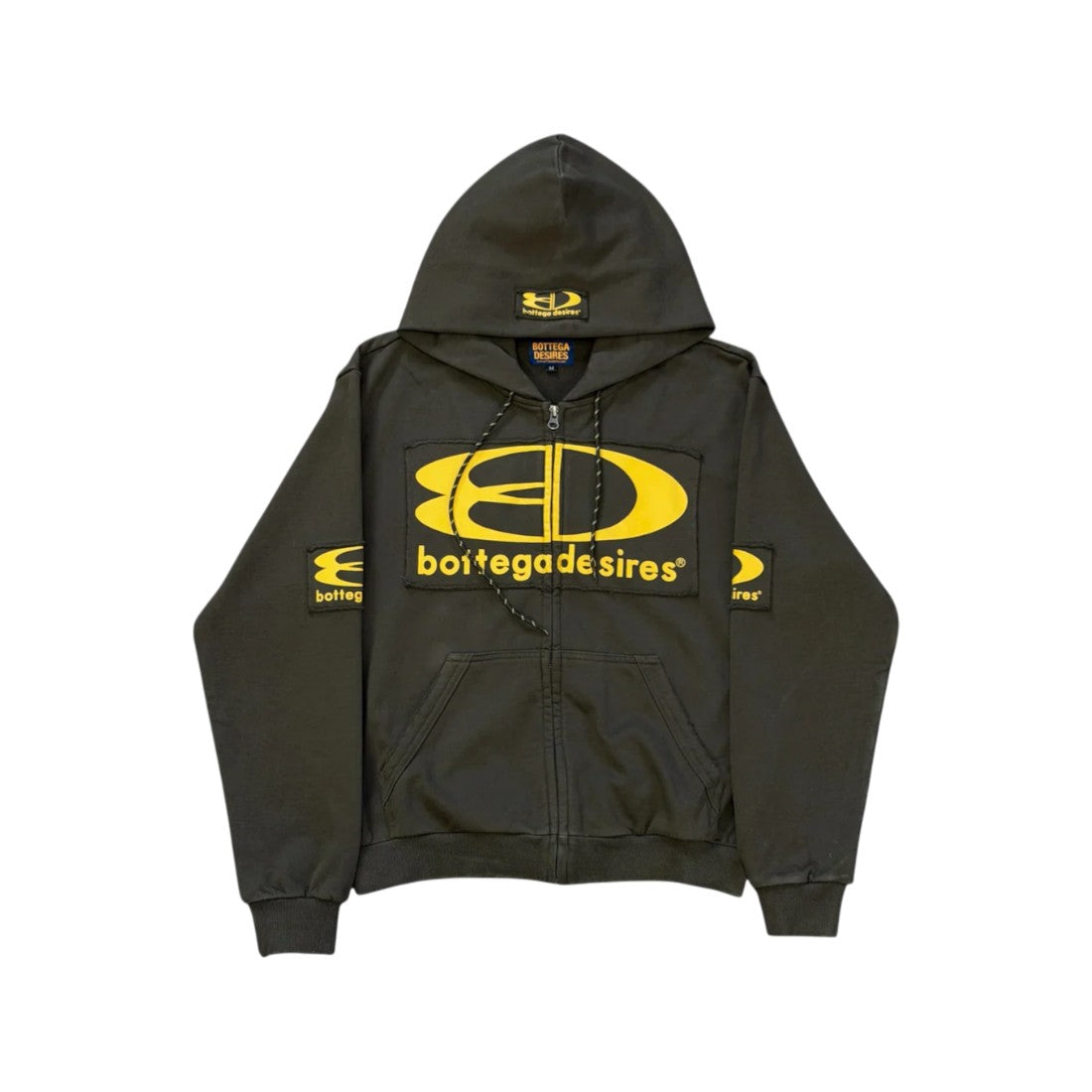
    Rather than chasing an overstuffed lineup, the bottega desires clothes collection is anchored by a handful of repeating product types, which actually works in the label’s advantage for consistency. Graphic t-shirts and the bottega desires shirt styles typically showcase eye-catching type-based graphics or logo placements across the chest, aimed squarely at a streetwear audience that wants to be noticed. The bottega desires hoodie is likely the brand’s flagship piece — heavier weight cotton blends, lowered shoulder seams, and front pouch pockets show up across most variations we’ve seen referenced by buyers. Two main directions define the bottoms: the bottega desires shorts style, running in cotton or fleece depending on the drop, alongside the bottega desires jorts, a denim short style that’s become something of a talking point online thanks to its oversized silhouette. Color options change with each drop, with black, off-white, and washed denim tones turning up regularly across listing images and buyer photos. So shoppers seeking a full wardrobe solution won’t find one here yet, since tailoring, extra outerwear, and footwear are all missing as of this review.

    A Look at Sizing and Fit

    Given the streetwear positioning, sizing skews roomy across almost every product type — intentionally so — meaning first-time buyers should go a size smaller for a standard fit. Especially the hoodie has drawn comments about its boxy cut that create visual bulk, so anyone between sizes should opt for the smaller option. Shorts and jorts sit at a longer inseam than typical mainstream basics, landing closer to knee-length or just below on most builds. Shirts follow the same oversized logic, with dropped shoulder seams that sit below a typical crew-neck tee. None of this is unusual for the streetwear category broadly, but it’s worth noting if you’re buying online without trying it on first. Carefully checking the size chart pre-purchase will save a return trip nine times out of ten.

    A Quality Review: Fabric Quality, Seams, and Wear Over Time

    Quality is the area generating the most genuine back-and-forth, apart from the naming controversy. Most accounts describe the hoodie fabric as a medium-weight cotton-polyester blend, which holds shape reasonably well through being washed over and over but doesn’t compare to premium 100% heavyweight cotton fleece from higher-end streetwear labels. The stitch work along seams seems steady on most items examined, though extra stitching at high-stress areas like pocket seams isn’t universal across every drop. Structurally, the jorts outlast the softer shorts, since over time denim simply outlasts cotton-blend fleece. The printed graphics on shirts often crack a bit after 15-20 wash cycles when not flipped inside-out for washing, an issue typical of mass-produced screen printing broadly, not specific to this brand. Colors on darker garments stay reasonably fast, while lighter off-white pieces show soiling faster and need more attention when cleaning. None of this suggests shoddy workmanship, but it clearly places this belongs in the mid-tier casualwear category rather than luxury-level build quality.

    Where Your Spend Actually Lands

    Price-to-quality ratio is the real question buyers ought to consider rather than measuring this against luxury tiers that aren’t relevant. Part of the price clearly funds the eye-catching designs and branding that makes these pieces recognizable across shared social content. Items appear to be made via standard overseas cut-and-sew facilities common across the streetwear space, controlling production expenses while allowing for frequent limited drops. That production model explains both the affordable price point and the occasional inconsistency between batches that some buyers have noted in reviews. Marketing spend is clearly significant too, given how large a share of the label’s exposure comes from content creators and online promotion rather than traditional retail placement. That’s a fair trade for buyers seeking a bold piece without the price tag of genuine luxury streetwear collaborations. Anyone anticipating the tailoring finesse of a house with decades of pattern-making history should adjust expectations.

    Bottega Desires Compared to Bottega Veneta: Comparing the Two Head-to-Head

    A plain breakdown is worthwhile here, because this pairing keeps appearing in search results, instead of letting the mix-up continue. These labels sit in wholly separate markets, price points, and design approaches, and the comparison that follows makes the divide clear.

    Point of Comparison Bottega Cravings Bottega Veneta
    Product Type Streetwear / comfort wear Luxury leather goods & designer ready-to-wear
    Origin Recent independent label (2020s) 1966, Italy
    Key items Sweatshirts, tees, shorts, and jorts Handbags, shoes, tailored pieces, and accessories
    Price tier Mid-range casualwear High luxury, starting well into four figures
    Sales channels Direct-to-consumer sales via social-media-led releases Flagship stores and department-store counters
    Signature design Bold graphics, oversized fit Intrecciato weave, minimalist lines

    Comparing them directly removes any impression of convergence beyond the common term in the name. One of the two bases its identity on instant visual punch at a budget-friendly cost, while the other relies on a long heritage of skilled making and limited access. Both approaches have merit, but the two serve completely different shopping needs. Should you be expecting the shorts or hoodie to hold resale value linked to the luxury house, such an assumption doesn’t pan out. If you came here just wanting solid streetwear at a reasonable price, the comparison becomes far less relevant to your decision anyway.

    Bottega Desires in 2026: Should You Buy It?

    After going through the full range — shirts, hoodies, shorts, and jorts — the honest answer is that it depends entirely on what you’re actually after. As a streetwear label with recognizable graphics and an oversized silhouette that’s currently in style, Bottega Desires offers a fairly decent product for its price bracket. The fabric and stitching won’t rival premium heritage labels, but they hold up fine for regular rotation and casual wear across a typical year. Sizing runs generously large, so ordering true to your usual size versus sizing down is the single most important decision before checkout. The jorts and hoodie stand out as the strongest pieces in the current lineup based on construction and consistency across units. Simply approach the name with clear expectations: this is a standalone streetwear label benefiting from a name resemblance to a luxury house it has no relationship with, and once that’s understood, judging the actual clothes on their own merits becomes far more straightforward.

  • Mike Amiri Leather Patch Sneakers Faded Black Denim

    AMIRI Shoes Beyond Sneakers: Boots, Slip-Ons and Formal Options

    Almost everything published about amiri shoes is in truth written about one sneaker. The house itself calls the Skel Top Low its signature, and the bones motif on it runs through every other category, which makes the focus understandable. It leaves a gap, though, for anyone who wants footwear from this label that is not a low-top basketball silhouette. A boot family, a treatment-led boot, a slip-on and a genuine absence where most buyers expect a dress shoe: that is what the record documents outside the sneaker line, and that is what this guide covers. Prices are observed 2026 market figures, not an official price list, and should be re-checked before you commit. Where something goes undocumented, this guide says so.

    Ryder Boot: The Anchor of the Non-Sneaker Line

    If the sneaker line has the Skel-Top, the non-sneaker line has the Ryder Boot. It is the one boot appearing consistently on the brand’s own pages across more than one material, which makes it the reference point rather than a seasonal one-off. Where the most expensive amiri sneakers stop is where this boot starts, above the sneaker band. That position makes clear how the house treats boots, as a leather-goods proposition rather than a volume one. The listings behind this guide failed to record construction specifications such as shaft height, lining and sole type. Anyone who quotes those confidently is either working from a current product page you should read yourself, or making them up.

    Three Materials, Three Observed Prices

    Nowhere in the range is material driving price on an otherwise identical model clearer than on the Ryder Boot. The leather version is observed at $1,090, the suede at $1,190 and the python-embossed at $1,290. A two hundred dollar spread on one silhouette is worth www.amiri-clothing.com knowing about before you assume that a higher listing means a rarer boot. The MX1 jean is also observed at $1,090, so a Ryder Boot and the signature jean meet at the same figure. The spread matches how the label prices jersey and denim, where base construction anchors a band and material lifts it. Read any Ryder listing by identifying the material first and the price second.

    The Bandana Buckle Boot, a Treatment-Led Piece on Footwear

    The Bandana Buckle Boot is the second documented boot, and the name tells you most of what it is. Rather than a model in its own right, Bandana is a treatment applied across the line, on jeans, shorts, jersey and this boot. On denim the paisley panel takes the same structural position pleated leather takes on an MX1, so the treatment is a substitution rather than a print. Once carried onto footwear, the result is a boot that reads as a member of a treatment family rather than a standalone silhouette. No observed price was captured for it here, and quoting one would be guesswork. Like other treatment pieces, it should sit at or above its category band.

    The Laguna Slip-On Sits in Between

    Not everything outside the sneaker line is a boot. The Laguna Slip-On is recorded at roughly $419, and that makes it the cheapest piece of footwear in this survey by a wide margin. The whole sneaker band sits above it, with the Skel Top Low observed at $650 and the MA-1 sneaker at $799. That gap is worth registering if your objection to the house is price rather than aesthetic. A slip-on answers a different wardrobe question than a boot, being a warm-weather piece rather than a statement layer. Treat it as the low-commitment entry to the footwear line, and not a lesser version of anything.

    The Formal Question, Answered Straight

    Buyers hunting for formal footwear from this label are usually after oxfords, derbies or loafers. The documented record does not support a dress-shoe line as a pillar of this house, and no flagship oxford, derby or loafer model showed up in the sources behind this guide. Proving that none has ever existed would be a different claim, and the distinction is a meaningful one. The house’s formal register, practically speaking, runs through boots under tailoring rather than a bench-made dress-shoe programme. If a listing announces an official dress-shoe collection from the brand, verify it on the brand’s own current pages first. The short summary is that the non-sneaker footwear this label reliably makes is listed below.

    • Ryder Boot, available in leather, suede and python-embossed versions
    • Bandana Buckle Boot, the same treatment worn on a boot
    • Laguna Slip-On, the entry price point of the footwear line
    • No recorded oxford, derby or loafer programme in the sources reviewed

    Why a Boot Changes the Denim You Buy

    Boots matter more here than at most labels, and this is the practical reason why. The Stack jean has a deliberately long inseam engineered to concertina at the ankle, and the Shotgun exists in versions with the same extended length. That design breaks over a shoe, and so what you put underneath changes how the jean reads. Over a low-top sneaker the stack folds softly, while over a boot shaft it sits cleaner. The house styles this combination itself, and a plain amiri t shirt with stacked denim over a boot is the best known version. If you already own core denim, a boot is a change to the jeans as much as an addition to the shoe rack.

    Sizing: Leave the Sneaker Rule Behind

    The Skel Top Low is described as true to size, with the brand advising you to take your usual size and round a half size to the nearest whole one. That rule is specific to that shoe and should not be stretched across the footwear line. Consistent buyer reporting was absent for the MA-1, the Stars Court and the long-running Bone Runner, and absent for the boots as well. Official sizing on men’s pages is European and runs from 40 to 48, making it the only measurement that reliably applies across models. The house does not publish full last measurements for every style, which means nothing here should be read as an official fit chart. Buy boots in particular through a channel with a workable returns window, and be prepared to exchange once.

    Side by Side: The Observed Prices

    The table sets out the non-sneaker footwear, with two sneakers included purely as reference points. Every figure is a 2026 market observation, not an official price list, and the gaps are left visible rather than filled. Reading it, the shape of the line becomes obvious quickly. There is one cheap slip-on, then a broad sneaker band roughly between four hundred and eight hundred dollars, with a boot tier above it. Nothing in the non-sneaker line is an impulse purchase except the slip-on. Before anything else, test a listing against the table for plausibility.

    Style Type Material noted Observed figure
    Laguna Slip-On Slip-on shoe Not stated About $419
    Skel Top Low Sneaker, for reference Leather, produced in Vietnam $650
    MA-1 Sneaker, included for reference Leather with mesh $799
    Ryder Boot Boot In leather $1,090
    Ryder Boot Boot Suede version $1,190
    Ryder Boot Boot silhouette Python-embossed $1,290
    Bandana Buckle Boot Boot The Bandana treatment No figure captured

    Channels, Markdowns and the Outlet Myth

    There is one official online channel, the brand’s own site, plus around thirty-three of its own boutiques. Everything else should appear on the stockists list the house publishes, naming Saks Fifth Avenue, Neiman Marcus, Nordstrom, Bergdorf Goodman, Selfridges, Harrods, Mr Porter, SSENSE and Mytheresa among others. That list is not closely maintained, because it still carries a retailer that shut down in 2024 and several misspelled names, so treat it as a floor rather than a guarantee. No official outlet exists in any form, and the house stated exactly that in a federal complaint filed in July 2021 against a provider hosting a counterfeit site styled as one. Legitimate discounts are structural, running forty to seventy per cent in season at authorised retailers and at the off-price arm of one stockist group, and so a marked-down boot is not automatically suspect. What is suspect is a storefront that calls itself an official discount store, promises sitewide cuts on current season, and appears nowhere on the published stockist list.

    Which One to Choose

    Work backwards from what you already own rather than forwards from a wish list. A leather Ryder Boot changes the most outfits for the money if your wardrobe is built on amiri clothing in the core register, an amiri shirt and stacked denim included. If you want the house aesthetic at the lowest possible commitment, the slip-on does that job without pretending to be a statement piece. If you specifically want a treatment-led piece, the Bandana Buckle Boot carries the same motif you already recognise from the denim. This house answers the tailoring question with boots rather than with a documented dress-shoe line, which is worth knowing for amiri men who mainly want something to wear with a suit. Confirm the material, confirm the channel, keep the invoice, and treat any bargain on current-season stock as the warning it usually is.